Buy Ebooks and PDFs at The iServalan Digitalia Production Studio

Amazon

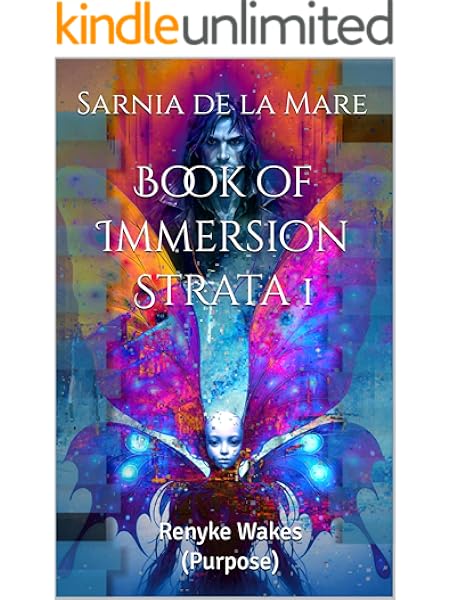
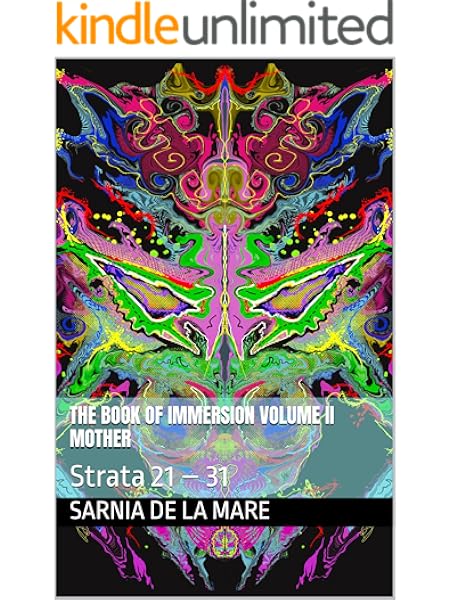
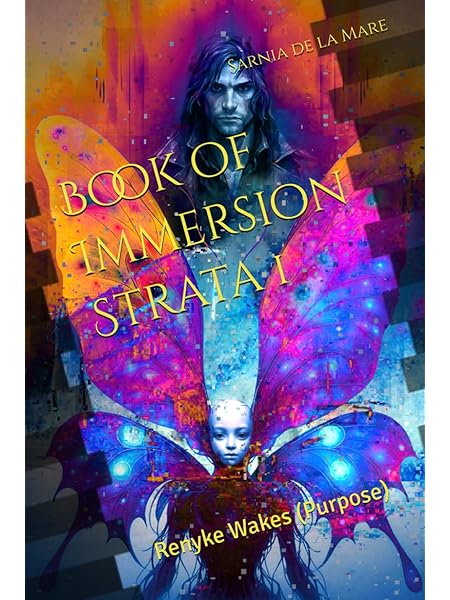
The Book of Immersion on Amazon

https://amzn.to/4qw85gy

As an Amazon Associate I earn from qualifying purchases

Book Strip

Book Strip
Books by Sarnia de la Maré FRSA

Saturday, November 15, 2025

The Persona as Weapon: Feminist Performativity in the Age of Surveillance

 The contemporary artist lives under uninterrupted surveillance. Not merely state surveillance (though that cobweb is always humming in the rafters), but the softer, more insidious surveillance of algorithmic witnessing — data trails, metrics, likes, biometrics, aesthetic categorisation. Our identities, once private negotiations, have been turned outward, flattened, and fed into machines that decide what kind of human we are allowed to be.

For women, this is not new.
We have always been watched.

What is new is the ability to weaponise the gaze rather than flee it — a tactic feminist artists have honed for decades, sometimes consciously, sometimes instinctively. For me, the development of personas such as Pasha du Valentine or the Countess of Brighton and Hackney was not a theatrical flourish. It was a calculated feminist intervention: a deliberate exaggeration of gender, class and erotic codes that refused passive consumption.

A persona is not a mask.
A persona is a mirror turned inside out.

It reveals the architecture of expectation:
How should a woman speak?
How should she desire?
How should she perform femininity, or resist it?
What is the acceptable ratio of softness to steel?

By crafting a heightened identity, the artist creates a rupture in the surveillance loop. The gaze is forced to work harder; its assumptions become visible — and therefore vulnerable. When I staged the Countess persona, I took the aristocratic feminine ideal and mutated it: sensual but confrontational, glamorous but bruised, erotic but intellectually armed. The Countess became a feminist critique disguised as decadence.

Meanwhile, Pasha du Valentine emerged from the punk instinct to dismantle beauty politics. She was deliberately excessive, deliberately unhinged from normative femininity. Where institutional feminism sought to educate, Pasha sought to contaminate. Her power came from exaggeration — the grotesque as rebellion, sensuality as critique, erotic flamboyance as academic argument.

In a world where women are constantly categorised, a persona is a refusal of categorisation.
It is a feminist detour.
A sabotage of the machine.

The digital age adds an interesting twist.
Algorithms cannot read irony.
They cannot interpret performance.
They cannot understand queering, camp, or persona as feminist resistance.

To an algorithm, the Countess is a “glamorous woman.”
To an algorithm, Pasha is a “provocative performer.”
To a human, they are ruptures in patriarchal logic.

This is why persona-based feminist art is more necessary than ever. We are dealing with a world that reduces women to data categories (“beauty”, “violence”, “soft content”, “adult”). By introducing persona as performance, we jam the code. We create noise. We reclaim narrative.

A persona can say things the “real” woman is not allowed to.
She can rage.
She can contradict.
She can mock.
She can expose.
She can be too much — which is another way of saying she can be free.

The truth is this: the feminist persona is not a lie.
She is a deeper truth.
A truth that needed a louder outfit.

In my current work — digital glitch, feminist essays, alternative archives, and the slow re-curation of decades of counterculture — I see all my personas merging. Not erased, not discarded, but integrated. Surveillance has changed, and so has my strategy. Today the work is less about deflecting the gaze and more about asserting authorship over how I am seen.

The persona remains my tool.
My armour.
My megaphone.
And sometimes, my scalpel.

Feminist identity is not a fixed object. It is a fluid choreography of resistance and invention. Through persona, the artist becomes many things at once: subject, object, author, critic, creature. And it is in that multiplicity — excessive, contradictory, deliberately unmanageable — that true feminist power resides.


Archiving Resistance: Feminist Counterculture and the Politics of Documentation

 We speak often about “preserving women’s voices,” but rarely do we address the uncomfortable truth: archives are inherently violent. They exclude, they sanitise, they organise memory into palatable sequences. Women, queer people, neurodivergent bodies, sex workers, punks, migrants — we are usually documented only in moments of scandal, danger, or failure.

This is why self-archiving became a feminist act.

Brighton Arts Club, Goddamn Media, the digital diaries, the moving-image loops, the obsessive documentation of performance personas — these were never indulgences. They were counteractions. Survival tactics. Ways of refusing erasure.

Mainstream archives prefer a certain legibility: dates, exhibitions, institutions, grant-funded projects. But counterculture thrives in the unrecorded, the ephemeral, the badly lit, the chaotic. Feminist art history is full of ghosts. Brilliant ghosts. Unseen performances. Lost zines. Deleted photographs. Women whose entire careers exist only in memory and myth.

I have no interest in becoming one of them.

My current archival practice — the NotWiki pages, the autobiographical essays, the combination of feminist theory with punk narratives — is part artwork, part resistance. Feminist counter-archives must be messy, breathable, contradictory. They must resist canonisation even as they build visibility.

To archive oneself is to refuse disappearance.

It is also to declare:

My life happened.
My art happened.
And I will decide how it is remembered.

The feminist archive of the future will not be a climate-controlled building.
It will be a network of self-authored digital traces — wild, interconnected, deliberately unprofessional, defiantly alive.

In other words: precisely what women like me have been building all along.

The Feral Feminine: Reclaiming Agency Through Subversive Aesthetics

 There is a particular electricity that crackles at the place where transgression meets reclamation. For many women artists, myself included, this is the exact point from which real creative agency begins — not the polite, domesticated kind of agency that fits comfortably into grant proposals, but a feral, sharpened-to-the-bone instinct. A refusal to be sculpted by the gaze, the market, the academy, or the politely curated feminism of institutional spaces.

The feral feminine is not a marketing category. It is a survival instinct.
A returning-to-the-body.
A clawing back of selfhood.

In the 1980s London punk co-operatives, feminine agency was not handed out in tidy envelopes. You had to forge it. Sometimes violently. Sometimes through laughter, paint, noise, or smashed aesthetics. The punk movement did not offer safety — but it did offer a new aesthetic language: distortion, rupture, interruption. These became our tools long before “intersectional feminism” appeared on university syllabi.

What I came to understand later — through performance, through the Countess persona, through poetic violence and digital art — is that the feral feminine is a methodology. A way of creating work that remains uncolonisable.

Institutional feminism hoped to tidy and legitimise the feminine voice.
Punk feminism wanted to unleash it.

The former seeks approval; the latter thrives on refusal.

As a feminist artist working across performance, moving image, and countercultural archives, I recognise that my work often sits at the intersection of feral instinct and intellectual critique. Rawness meets analysis. Elegance meets rupture. Feminine beauty is both weapon and question mark.

My personas — Pasha du Valentine, the Countess of Brighton & Hackney — were not costumes. They were insurgencies. Class insurgencies. Gender insurgencies. Erotic insurgencies. Performative engines designed to expose how femininity is staged, commodified, and weaponised.

To be feral is not simply to be wild.
It is to be self-authored.

And when women artists claim authorship over their own representations — from punk beauty manifestos to glitchy digital bodies — they destabilise the theological hierarchy of art history. The feral feminine has no patience for canonical obedience.

Today, feminist art risks becoming too refined, too theoretical, too emotionally deodorised. Yet the feral method remains alive in the margins — in queer zines, in underground film, in the frantic gesture of mark-making, in digital distortion, in the disobedient body.

If my work argues one thing, it is this:

The feminine does not need to behave to be valid.
It does not need to be soft to be beautiful.
It does not need to be institutional to be intellectual.

The feral feminine insists on occupying space through instinct, invention, and unapologetic disruption.

It is not a genre.
It is a praxis.

And above all —
it refuses to be house-trained.

Friday, November 14, 2025

💋 Mills & Swoon Daily #2 The Caged Bird and the Stable Boy #romance #flashfiction


#RomancePodcast #FictionPodcast #AudioRomance #NarratedFiction #ShortStoryPodcast #RomanticFiction #AudioDrama #LoveStories #PodcastRomance

💋 Mills & Swoon Daily #2

The Caged Bird and the Stable Boy

Lady Isolde Ravenshaw entered the stables. She was a reluctant horsewoman but had made the effort because of him.

Thomas the stable boy was not, strictly speaking, a boy. 

At twenty-two he was marked with the attributes of maleness and beauty that were worthy of an Adonis. His muscular forearms and chiselled torso glowed in sun-browned competence. 

Once she had seen him swimming on a hot summer afternoon having taken a wrong turn in the grounds of the estate. She had watched longingly, his naked body as it basked in sun and water in a simple celebration of movement, nakedness, and life itself.


One did not normally encounter such thrilling attributes at London soirées. Isolde had had enough of pot-bellies and bad breath to last a life time. Thomas had flicked a switch and she understood passion and desire at last.

“Morning, my lady”
he said with a sideways smile.

He had seen her watching him but hadn't let on. He enjoyed being watched by a beautiful and socially untouchable woman.

“Careful of your shoes in here,” he murmured.
“Floor’s still damp from the morning’s rain.”

“I have other shoes,” she said lightly.
“I do not have another of you.”

He turned at that, startled into a grin.
The horses snorted softly in their stalls,
as if deeply invested in the developments of the afternoon.

She watched Thomas hang up a bridle,
his shirt sleeves rolled, hay dust caught in dark unkempt hair.
On the workbench beside him lay a scrap of parchment,
ink still glistening in a ray of sun.

“What are you sketching?” she asked.

He moved too quickly, trying to cover it with his hand.
“Nothing. Just… notes.”

Her curiosity sharpened.
"Do you truly think I shall faint at your… notes?”

Slowly, he lifted his hand.

It was a map.
Not of any gentleman’s lands she recognised,
but of the estate grounds as only someone who lived amongst them would see:
hidden footpaths, fallen walls, the place where the river narrowed,
and, in one corner, a small cross inked with unusual care.

“What is this?” she asked, fingertip hovering over the cross.

He swallowed.
“That, my lady, is where the fence breaks. Should someone... wish for freedom and adventure,
they could slip out unseen"

His eyes flicked up, testing her.

Isolde felt a slow, wicked warmth pour through her.
“And if I were the sort?”

He hesitated, then stepped closer, voice low. The were almost touching, a separation of propriety was paper thin. She could feel his breath, now, almost panting, on her cheek as he looked down upon her, making love to her with his wanton gaze.

“Then I’d meet you there.
At dusk.
With a lamp and two sound horses.
And I’d show you the rest of the map.”

She looked back down at the parchment.
Beyond the fence,
he’d drawn all the places a lady of her station was not supposed to know existed:
the ruined folly; the secluded glade;
a little scribbled note by the river bend that simply read Perfect for swimming.

“You’ve quite the talent for cartography,” she murmured.

“I know these grounds better than the Lord himself,” he said.
“Been escaping them since I was a lad.”

“And now you offer escape to me.”
She met his gaze fully.
“Why?”

His jaw tightened.
“Because I’ve watched you walk that terrace every day like a bird pretending its cage is a choice.
And because”—here his voice dipped—
“I’d like to see what you’re like when nobody else is watching.”

There it was.
The treasonous invitation she hadn’t known she’d been waiting for.

Isolde folded the map carefully,
tucking it into the bodice of her gown with deliberate slowness.

“At dusk then,” she said.
“If you’re brave enough to free a caged bird.”

As she turned to go, he added,

“Follow the map exactly.
And if you get lost—”

“I shall call your name,” she cut in, glancing over her shoulder.
“And trust that you will find me.”

The horses snorted again, as if in approval of the clandestine plot.

That evening, when the sky went molten-gold over the fields,
a figure in a dark riding cloak slipped through the broken fence
and found a lantern already waiting on the other side.

Thomas lifted it, the light catching his smile.
“Welcome to the rest of the map, my lady,” he said.
“Shall we redraw your borders tonight?”

She held out her gloved hand.
“For thirty years,” she replied,
“men have told me where I may and may not go.
I think it’s time someone let me choose my own routes.”

He took her hand, steady and sure.

Behind them, the great house loomed, full of strict corridors and polite rooms.
Before them, the night opened like a secret promise,
and the Countess Ravenshaw stepped into it
with the stable boy at her side,
following a map she now realised she’d been searching for all her life. 

Finally, happiness and thrill would collide in the bodies of those who dared.


#MillsAndSwoon #FlashRomance #DailyRomance #RomanticShortStory #AgeGapRomance #ForbiddenRomance #HistoricalRomance #VictorianRomance #PeriodDrama #SarniaDeLaMare

Thursday, November 13, 2025

💋 The Duke and His Mother's House Guest Mills and Swoon Flash Fiction read by Sarnia #romanceflashfiction

 “Welcome to Mills & Swoon Daily — where your morning scandal is served warm, wicked, and just a little bit improper.”

Today’s tale: The Duke and His Mother’s House Guest.

A seductive Victorian age-gap moment inside a grand manor foyer. A glamorous older lady guest lowers her hood, revealing emerald earrings and dark curls. Her silk stockings are mud-stained, hinting at scandal. A young, handsome Duke stares at her with shock and desire. Cinematic lighting, warm candles, aristocratic decor, subtle sensual tension, elegant but provocative mood, romantic period-drama aesthetic, ultra-detailed fabrics and expressions.


By Sarnia de la Maré — Mills & Swoon Daily #1

Lady Elowen Hart was not accustomed to being mistaken for staff,
but she had arrived at Hawthorne Hall in a travelling cloak
and mud up to her silk-white stockings,
so the error was, she supposed… understandable.
Almost.

The Duke strode into the foyer with the confidence of a man
who had never once been contradicted in his life.
Such entitled grandeur might have been repulsive
if he hadn’t been so annoyingly well-formed.

“You must be the new governess,” he announced,
looking her up and down with far too much interest
for a man hiring a tutor for his niece.

Elowen raised a brow.
“Must I?”

He hesitated, thrown off-balance.
“…You’re early.”

“And you, sir, are mistaken,” she replied smoothly.
“But I do admire a man who leads with certainty,
even when he’s wrong.”

A flush crept up his neck — delicious.
Lady Elowen had a reputation for disarming younger, handsome men,
though her reputation had likely not reached these rural shires.

He clearly had never been spoken to like that before.

She removed her hood,
revealing emerald earrings, a cascade of dark curls,
and the unmistakable aura of old money.

The Duke blinked.
“You’re—”

“Yes,” she said, stepping closer.
“The guest your mother invited for Christmas.”
Then, with a wicked smile:
“Although if you prefer the governess…
I can play along.
I am rather good at… play.”

The silence that followed could have melted frost from the windows.

He cleared his throat.
“I… should show you to your room.”

“Indeed,” Elowen said,
glancing down at her ruined stockings.
“For they are quite soiled, and I fear I may need help removing them.”

“Oh,” said the Duke, suddenly breathless.
“I fear the staff are retired for the night.”

“In that case,” said Lady Elowen matter-of-factly,
“perhaps the Duke himself might assist.”

The end...or maybe the beginning

“Join me tomorrow for another coffee-break scandal from Mills & Swoon Daily.
And if you want more mischief, find the Kindle collection linked below.
Until then — behave disgracefully.”

Read our other Book on Amazon or Gumroad

Gumroad 👉 https://gum.new/gum/cmhx9gdel000004ladv938mks

Kindle 👉 https://amzn.to/43W6ruM

Amazon https://amzn.to/4oWDDel

#millsandswoon #romanceflashfiction #agegapromance #sarnidelamare #coffeebreakromance #fictionpodcast


Tuesday, October 28, 2025

The Judge and the Model a 💋 Mills and Swoon Romance Short by Sarnia de la Maré

Penelope Fairlie had never faltered. 'Faltering is for amateurs and the mentally ill', she would say. 

At fifty-two, she was the embodiment of composure. That rare breed of Englishwoman who moved through life as if time itself obeyed her schedule. She was a beacon of virtue and as disappointing as a soggy digestive, though no one would ever tell her due to her ability to petrify anyone within her orbit, even other people's dogs in Hyde Park.

She lived in a tall, ordered house in Belgravia with her husband, Charles, a respected tax barrister, and their Pomeranian, Bertie, whose coiffure was definitely worse than his bark, styled by an expensive personal dog groomer from Hampstead. There were no children, a fate that had become a new normal many years before.

If one dared to asked Judge Penelope Fairlie when she last felt the surge of a carnal wave, she would probably tell you it was when she saw Julio Iglesias in concert for her twenty-first birthday

Charles Fairlie was a man of professional eloquence and personal grooming.
He had spent their thirty years of marriage perfecting the art of absence while being perpetually present, a skill much admired in the legal profession.

Their relationship had long ago settled into the comfortable civility of two people who shared mortgage statements, mutual respect, and an occasional bout of influenza. They dined well, travelled seasonally, and never raised their voices.

Their lives read like an "at Home on Sunday" newspaper spread fused with Pomeranian Monthly.

But one Tuesday Penelope returned home early, having adjourned court for a witness who had fainted theatrically in the dock.
She let herself in, hung up her Burberry coat, popped her golfing umbrella in the stand, and followed a peculiar, yet vaguely familiar sound. It was somewhere between a gasp and a whimper and reminded her of the 80s.

As a woman of the world, well familiar with the peculiarities of human behaviour in her court, the vision before her was of something more unique in her own personal catalogue of 'seen it all befores'.

Charles was on all fours in a gimp mask making woof sounds, and Barry, the groomer from Hampstead, was saying something along the lines of, "you are a very naughty boy," dragging him along with Bertie's best Chanel dog lead.

A long pause preceded the events that unfolded. Bertie himself had been sitting on his velvet cushion watching things in a confused state, just glad that now Mummy was home. He had always hated the groomer and would regularly bite him.

"Your toupee has slipped, Barry." Penelope said curtly, "along with your reputation as a my dog groomer. Get out of my house. " And you, Charles, you can leave too, I never want to see either of you again. You belong in a kennel, and I hope you get fleas."

The following weeks were tortuous. Deep pain and menopause slushed up Penelope's brain to such a degree that she had taken some time off work and visited and old school friend in Bath.

Unbeknown to Penelope, a deep current of change was about to take her to new shores.

"You will Love Bath," said Cecilia. "Stay as long as you need. Take up some classes, you can come to mine! Paletes, ballet barre, aerobics, and hot yoga."

Cecilia was optimistic and gleeful. Penelope was tired just thinking about it.

"Art then," said Cecilia."

"Art." answered Penelope for no good reason, the word fell out like a sigh.

"YES!" Cecilia was being gleeful again. "You were so good at school."

It was on the third afternoon and Penelope meandered through the town whilst Cecilia was doing something sweaty. At the Assembly Rooms, she was drawn by the sign: Life Drawing Class – All Welcome. Knowing it would get Cecelia off her back, she popped in to find out more.

Within two minutes of enquiring she was shuffled into a room and guided towards an easel with rudimentary materials. 

An artist next to her passed her something.

"Here, it's my spare."

Now fashioned in a smock and still wearing the beret she had left the house in, Penelope was not unaware of the fact that she had become a slightly ridiculous stereotype.

She picked up a pencil and looked behind the easel wondering if anyone heard her mumbled expletive.

The artist next to her giggled and whispered, "it's a schlong and a half isn't it?"

The model stood on the platform with the unselfconscious ease of youth.
Broad-shouldered, wiry, beautiful in that careless, provisional way some men are before life edits them down.
His name, she later learned as he did polite rounds to view each insult to art, was Leo. He was twenty-six, recently moved from Brighton, “a performer, mostly.”

She assumed “performer” meant actor and imagined him performing Shakespeare, glad he had robed up.

"Oh how lovely." She said, smiling and avoiding eye contact, as well as nether region staring.

When their eyes met, something ancient sent a small electric shock downward. Penelope's body remembered it still existed.

After the class, he approached her.

"I really liked your drawings of me," he said. "They are precise and ordered. You should see some of the artworks I see," he laughed.

"Would you like them? Honestly, I won't keep them. I am only here on holiday, killing time really."

Leo was ecstatic and handed her a leaflet. Performance Art Showcase — The Velvet Room, Friday 8pm.

"I know it's short notice," he said...."

“Come,” he begged. “It’s experimental. It will be very inspiring, freeing, and give you a real sense of the place. Please say you will come, it would be an honour to have you in the audience." 

Leo seemed so sweet so eager that Penelope agreed. After all, she needed to get used to going out alone now that was old, free, and single.

The Velvet Room was tucked down a narrow lane, unmarked but for a faint boom of thumping bass and the smell of incense and beer. Inside, the lighting was so intimate Penelope couldn't see a thing. People were arriving dressed in clothes she had never seen, with body parts on show that should not be seen.

A woman with green hair was throwing questions into the air. “You here for the showcase?”

Penelope nodded. “I believe so.”

The girl was holding something, "where dya wan' it?"

Penelope looked confused, "wrist or hand?" The green haired girl blew a pink bubble from her black lips and Penelope reminded herself to be....more artistic.

"Oh, hand I think," she said, still confused.

"Take yer glove off then," demanded the girl.

Before Penelope knew it there was a black smudgy tattoo inked on her well manicured hand and the girl was blowing another pink bubble and saying 'NEXT!"

The stage was a shallow platform backed by velvet curtains that had known better centuries. She found a seat near the back, removed her other glove, and tried to look as though she attended avant-garde happenings regularly.

The music began, low, slow, and full of promise. There was a pulsating boom and African rhythms emanating from all around then a tall figure stepped into the light.

It was Leo.

Dressed in nothing but metaphors.

Penelope froze. She recognised at once the calm, unhurried posture, the deliberate movements, this was not theatre, nor dance. It was… a naked exhibition. A performance of skin and hair that began to move under strobes and beats.

Around her, the audience applauded softly, reverently, as if this were Mass and he the officiant.

He spoke — low, assured, words that might once have been poetry before they undressed.

“We are bodies before we are names,” he said. “We perform to be believed.”

Penelope felt the strangest vertigo. She was blushing with embarrassment. But she took a few deep breaths and focused on the art message which to this day, she has no understanding of.

When the lights came up, she remained seated to compose herself and get over the shock.

There was a five minute break until the next performance. Time to make a subtle exit.


But Leo was running over.

“Thank you for coming,” he said. 

"Thank you for getting dressed," she said. He laughed and she noticed for the first time his beautiful face as it lit the room.

"Let's get out of here...Let me buy you a drink." Leo said in a convincing tone.

She almost declined. But politeness, that old reflex, and possibly some other old reflexes, betrayed her.

That was the start, she would muse when looking back. The time his skin and presence was so charged she could feel it in her stomach.

“You don’t talk like my usual audience,” he said, over red wine.

“Your normal audience has piercings.”

He laughed, and it broke something in her.
The laughter, the wine, the gentle disarray of being unobserved, each loosened a burden she hadn’t realised she carried. The coat of propriety was left at the door.

He spoke about leaving Brighton, about performing to survive, about wanting to write.
She listened, surprised by how much it mattered that he wanted to be understood.

When they finally stepped back into the night, the rain had softened to mist. 

"I'd like to make love to you." Leo declared.

"Let's get a hotel room," said Penelope, excited and sexually awakened in a single afternoon.

The walk to her hotel was brief, almost quiet. Neither of them suggested what would happen next; neither pretended not to know.

Leo was considerate and both domineering and submissive in passionate waves as they explored each others bodies in the finest detail. They made love four times, and then once again, before breakfast in the shower. It was more than she had made love to her husband in twenty years.

As they parted at the taxi rank Leo kissed Penelope's cheek. "I will never forget you." he whispered.

"Thank you dearest, charming boy," she answered.

For the first time in years, Penelope had faltered and tiptoed into the dark side.

But, more importantly, she discovered hat it would not kill her.

Judge Penelope Fairlie returned to London as if she were the heroine of her own parole.
Bath had washed her clean of stigma, expectations, and an imaginary birdcage.

Her hair was shorter, deliberately so, an unspoken rebellion against the helmet she had worn for thirty years. She had bought dresses that kissed her figure in linen and silks. Men would look longingly at this beautiful modern woman who knew herself. Women would watch in disgust.

"Who does she think she is, a woman of her age wearing that?"

Penelope was a Belgravia scandal, albeit, a small one.

Even Bertie seemed confused by her new scent of freedom. 

Within weeks, she was back on the bench, a leaner, luminous, version of herself, possessed of an unnerving calm. Courtroom 7 had missed her efficiency, if not her warmth. The clerks whispered that she smiled now, occasionally, which was far more disconcerting than her old froideur.

But fate, like a malicious court usher, was waiting to file an unexpected motion.

The case was Regina versus Leontius Ryder.

Penelope glanced at the list and thought the name familiar, but it wasn’t until he entered the dock, hands folded, curls tamed, that her heart performed a most un-judicial leap.

Leo.

The naked philosopher of The Velvet Room now stood before her in a borrowed suit, accused of public indecency and the destruction of a civic sculpture valued at £100,000.

“Your Honour,” said the prosecution, “the defendant’s so-called performance involved squirting cream over the marble bust of Sir Robert Peel while entirely unclothed.”

Penelope inhaled sharply through her nose. The vision of cream was inconveniently vivid.

Leo looked up. Recognition was hard as a lightening streak. His eyes widened, then softened, as if to say forgive me, muse.

Penelope composed herself, rearranging her face into its most neutral expression, the mask of a woman who could sentence her own libido if required.

“The court,” she began, “is not a theatre.”
A pause.
“Though I appreciate some of you may find the acoustics similar.”

A ripple of laughter broke the tension.

The trial, inevitably, was adjourned. She could not preside; conflict of interest, emotional and otherwise.

Outside, the press had gathered.

Judge Sees Defendant Naked! shouted one speculative headline the next day. It's the Naked Truth Your Honour! said another. 

Charles sent a curt text: You’ve become quite the spectacle, Penny. I am suing for custody of Bertie.
She deleted it and ordered another martini.

When Leo appeared again, weeks later, she attended discreetly, a mere spectator in civilian clothes. He was represented by a nervous young barrister who clearly adored him.

When the verdict came — guilty, with mitigating artistic intent — Penelope almost smiled. A small fine, community service, and an interview on Channel 4.

When the fuss had died down, and it didn't take long, Leo waited in the rain outside chambers.

"I am so glad you messaged," he said. “I didn’t mean to embarrass you.” He was looking down like a schoolboy, but then he looked up and was the man she had longed for all these weeks.

“You didn’t,” she lied. “You reminded me I’m still flammable.”

He grinned. “That’s not a bad epitaph.”

They walked together through the wet London streets until decorum dissolved again. But this time it was bigger than passion. It was a longing that both needed to satiate in the knowledge that however long it lasted it would be time treasured with the lust and companionship of two people who could escape their scripts. And that it was nobody’s business but their own.

“Perhaps I’ll paint you next,” he said.

“Don’t,” she replied, “you’d only end up in court again.”

But her smile, that new, dangerous smile, said otherwise.


©2025 Sarnia de la Mare


Monday, October 20, 2025

Chapter 2: London Calling Rebel Queens: Women, Punk, and the Sound of Resistance, Tale Teller Club Books


Chapter Two: London Calling

If New York was a dirty prayer, London was the reply — shouted through a ripped speaker and a mouth full of safety pins. By the mid-seventies, Britain was broke, bored, and spoiling for a fight. You could smell revolution on the bus queues and in the dole offices. The youth didn’t just want music; they wanted a detonator.

Into this walked the women of British punk — armed with sneers, art-school intellect, and a taste for self-destruction that doubled as self-invention. Poly Styrene, Siouxsie Sioux, Gaye Advert — they weren’t echoing New York’s noise so much as localising it. They took the downtown poetry and made it spit with a London accent.

Where Manhattan had art galleries and amphetamines, Britain had bin strikes and boredom. Punk here was uglier, funnier, and more political. The girls didn’t need to look pretty — they looked like a warning.

In London, fashion wasn’t decoration — it was a declaration of war. The women of punk wore their politics on their sleeves, quite literally, held together with safety pins and sarcasm. What New York had treated as style, Britain turned into armour.

Vivienne Westwood’s Sex boutique became ground zero for the new aesthetic — bondage trousers, razor-blade necklaces, and slogan tees that could get you arrested. Siouxsie Sioux made panda eyes dangerous, Poly Styrene made braces beautiful, and Jordan from Seditionaries walked the King’s Road like a living warning label.

For women, these clothes were not about pleasing anyone. They were about taking up visual space that had always been denied to them. Punk’s female icons understood the power of ugliness — how to weaponise it, romanticise it, and laugh through it. They didn’t want to be beautiful; they wanted to be unforgettable.

This wasn’t rebellion for the cameras; it was rebellion because there was nothing left to lose. A nation on the brink bred a generation who found glamour in rubble. London’s girls made chaos couture — and somehow, the world copied their look before understanding their rage.

Sisterhood was never simple in punk. It came with sharp edges and cigarette burns. The women who tore up London’s stages didn’t gather around campfires to sing about unity — they shouted over each other in dressing rooms that smelled of hairspray and nerves. But beneath the chaos, there was a current of shared purpose: a refusal to be told how to behave, even by each other.

Poly Styrene spoke about equality with a laugh that made the word sound suspiciously tidy. Siouxsie Sioux dismissed labels altogether, declaring herself “beyond feminism,” while still embodying its rawest instincts. Ari Up of The Slits called her band “a tribe,” and that was exactly what it felt like — messy, primal, self-taught, and gloriously ungoverned.

The feminist movement at large didn’t quite know what to make of them. Too brash, too sexual, too unserious. But punk feminism didn’t need permission from the universities or the marches — it existed in the sweat of the gig, in the ink of the fanzine, in the way a girl could get on stage with nothing but nerve and be louder than the boys.

These women didn’t write manifestos; they were the manifesto. Their solidarity was imperfect but electric — more survival pact than sisterhood circle. And in the smog of Thatcher’s Britain, that was revolution enough.

London’s punk women didn’t just shake Britain — they set off tremors that cracked the cultural pavement worldwide. The Slits toured Europe like missionaries of beautiful anarchy, their ripped dresses and bare feet scandalising television hosts from Paris to Stockholm. Siouxsie Sioux became an international icon of postmodern femininity — part dominatrix, part deity. Poly Styrene sang about consumerism before the art schools caught on.

What began in the backrooms of Soho became a global movement of misfits. From Berlin’s squats to Tokyo’s basement gigs, girls picked up guitars and zines, found their own voices, and made glorious noise. They didn’t need visas for rebellion; distortion travelled faster than customs could stop it.

Even as punk splintered into post-punk, new wave, and goth, the women kept reinventing themselves, proving that attitude could outlive any genre. They didn’t wait to be written into history — they wrote it in lipstick and permanent marker.

The irony, of course, is that decades later, the same industry that sneered at them sells their image on t-shirts. But maybe that’s the ultimate punk revenge: the system paying royalties to the women who spat in its face.

They didn’t just call London. They called time on an era that told women to sit quietly. And the echo of that call — ragged, glamorous, and loud — still rings through every generation that dares to make art without asking permission.

When the amps cooled and the mascara cracked, London still smelled of revolution. The girls had burned their initials into the city’s skin and walked away before anyone could tidy up the mess. You can trace their ghost trail in every club flyer, every sneer on a teenage face clutching a second-hand guitar.

They didn’t want statues or nostalgia; they wanted noise that never died. And in that, they succeeded. Because punk, like womanhood, doesn’t fade — it mutates. It survives in alleyways and playlists, in art-school basements and drag bars, in anyone who’s ever decided that “enough” isn’t enough.

Next stop: Berlin — where the revolution learned to dance in the ruins.


Find all the Tale Teller Club Profiles and websites below


Publishing
Books https://amzn.to/43aFeEd
Amazon and Kindle Author Page https://www.amazon.co.uk/stores/author/B0CWGX2DJ6
A-N Artist Profile https://www.a-n.co.uk/person/sarnia-de-la-mare-frsa-2/

Video
Main Youtube https://www.youtube.com/@taletellerclub
Kids' YouTube https://www.youtube.com/@taletellerclubkids


Blogs and Websites
Music and Fashion https://iservalan.com/
Book of Immersion https://www.bookofimmersion.com/
Publishing Hub https://www.taletellerclub.com/


Sales
Music https://taletellerclub.bandcamp.com/
Artworks https://aura.bookofimmersion.com/
Saatchi Gallery https://www.saatchiart.com/en-gb/sarnia

Socials
Facebook https://www.facebook.com/sarniadelamare (personal)
Instagram https://www.instagram.com/sarniadelamare/ (personal)
Linkedin https://www.linkedin.com/in/sarnia-de-la-mare-frsa-75559a283/
https://x.com/taletellerclub


 Other Books by Tale Teller Club Press


Kindle Edition


Kindle Edition


Kindle Edition


Kindle Edition


Kindle Edition


Kindle Edition
Remove from view


Kindle Edition


Kindle Edition


Kindle Edition


Kindle Edition


Kindle Edition


Kindle Edition


Paperback

FREE delivery Thu 23 Oct on £10 of items dispatched by Amazon


Paperback

FREE delivery Thursday 23 Oct


Paperback

FREE delivery Thu 23 Oct on £10 of items dispatched by Amazon


Paperback


Paperback

FREE delivery Thu 23 Oct